
-
Graduate Student: Visual Arts
In Search of ‘My Beloved Pauline’ is a video essay that examines German imperialism in West Asia before and during World War I through the lens of a vernacular photo album titled Meine Liebe Pauline, zur Erinnerung an Türkei-Kleinasien 1917/18.
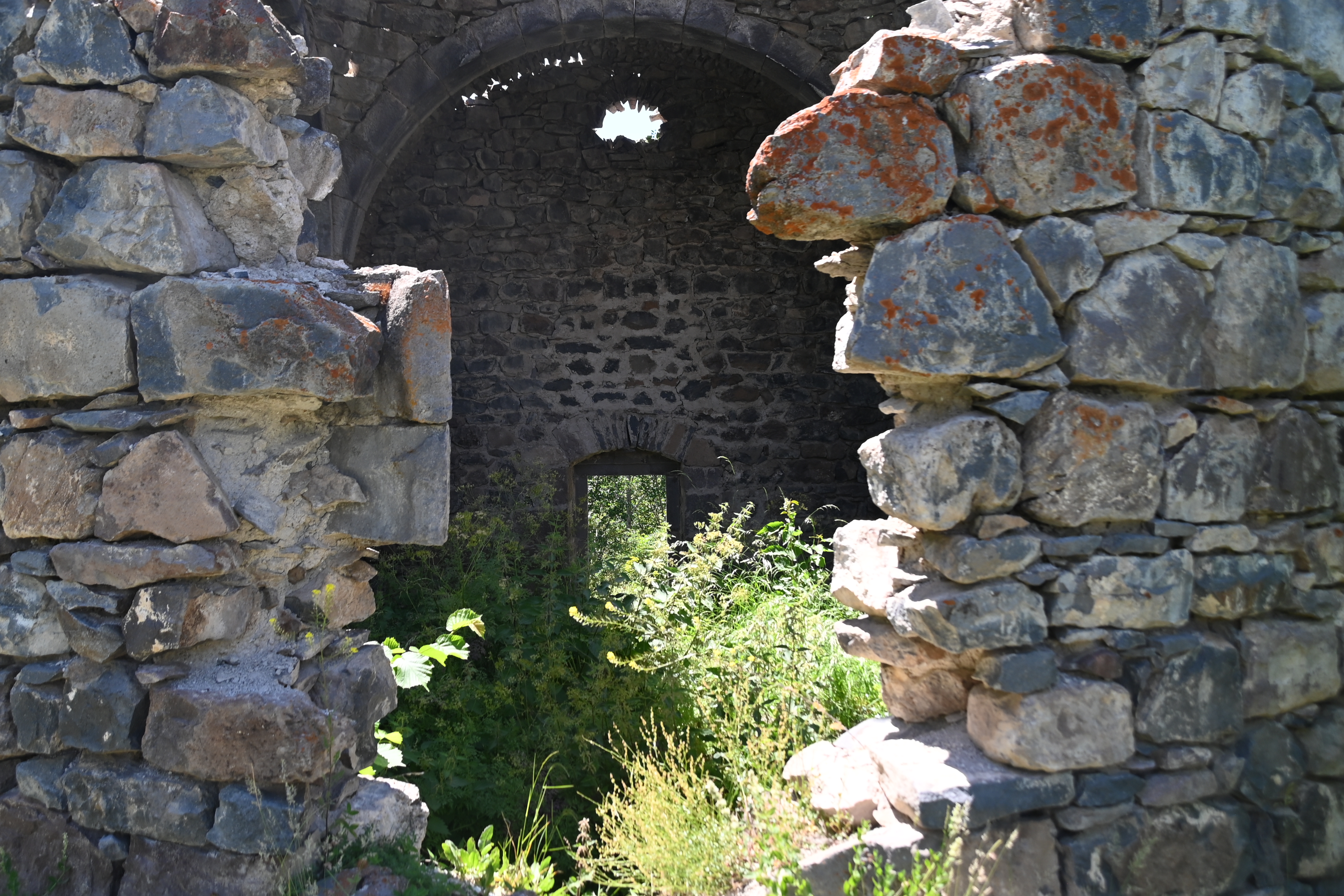
In Search of ‘My Beloved Pauline’ is a video essay that examines German imperialism in West Asia before and during World War I through the lens of a vernacular photo album titled Meine Liebe Pauline, zur Erinnerung an Türkei-Kleinasien 1917/18 (My Beloved Pauline, in Memory of Turkey–Asia Minor, 1917/18). Created by an unidentified German military officer stationed in the Ottoman Empire, the album contains intimate snapshots addressed to a distant “beloved Pauline.” These personal photographs, meant to document moments of daily life, stand in stark contrast to their content: depictions of German colonial and military operations, including the Armenian Genocide in Şebinkarahisar, the smuggling of Anatolian artifacts in Değirmentaş, and the construction of the Baghdad Railway in Ulukışla. The completed video essay will weave vernacular photographs with newly filmed footage and field recordings, bridging historical and contemporary image-making practices. By interrogating how photography shaped, and continues to shape, imperial memory, the work complicates the boundaries between personal narrative and state violence.
Fellowship Cohort: Fall 2024
Why did you choose this project?
This is the project for which I received support from the Suraj Israni Center for Cinematic Arts.
How was this fellowship meaningful or impactful to you?
The fellowship was transformative for my research and artistic practice. It enabled me to move beyond archival discovery into post-production by providing the time and resources to investigate, contextualize the footage I filmed along the route of German military officer in Turkey. Just as importantly, the fellowship gave me the institutional credibility to continue receiving future funding to guarantee the successful realization of the completed film. Without this fellowship, it would not have been possible to materialize this multi-sited research, to weave archival and fieldwork together into a cohesive project, or to bring visibility to erased histories of empire, genocide, and cultural memory through the medium of film.
Have you showcased this work in any other ways or places? Do you have any future plans related to this work?
This piece is confirmed to be released as part of the 2027 Sharjah Biennial.
Hande Sever is a writer and research-based artist whose work explores the excavation of lost texts and distant images, examining how their omission and dissemination inform historical revisionism and shape archival practices. Grounded in theories of sovereignty and necropolitics, Sever's research interrogates the ways in which historical narratives are shaped and manipulated, particularly in the context of military violence, surveillance, and censorship. Often drawing from her family’s history of persecution, her lens-based practice explores the intersection of personal and collective memory, uncovering how visual culture is used to both erase and construct historical narratives. Sever’s work has been exhibited internationally at the Hauser & Wirth in Somerset (2018); Museum für Angewandte Kunst in Vienna (2021); Georg Kolbe Museum in Berlin (2025); Wereldmuseum in Amsterdam (2025); Czong Institute for Contemporary Art in Seoul (2021); REDCAT: Roy and Edna Disney CalArts Theater (2025) and the Wende Museum of the Cold War (2025) in Los Angeles, among others. Her essays and interviews on art, architecture, and public space have been published or are forthcoming in the Oxford Art Journal, Getty Research Journal, FIELD: A Journal of Socially Engaged Criticism, Stedelijk Studies, Public Art Dialogue, MARCH: A Journal of Art and Strategy, X-TRA Contemporary Art Quarterly, Contemporary Art Review Los Angeles, and Frieze Magazine. Sever’s work has been supported by grants from the Félix González-Torres Foundation, California Arts Council, Eidolon Center for Everyday Photography, The Andy Warhol Foundation for the Visual Arts, and the Hrant Dink Foundation.